


Zest is a depth, not a job
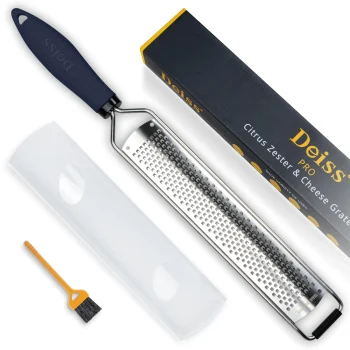
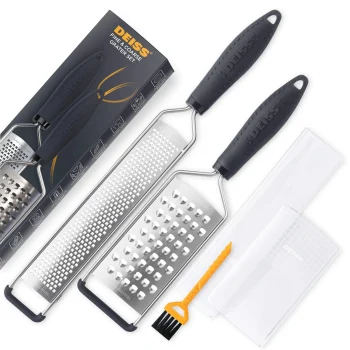
The flavour you want is in the coloured skin. Directly under it is the white pith, which is bitter and ruins the thing you put it in. Peeling it off afterwards is the slow, fiddly part of any recipe that calls for zest. Teeth this fine take the colour and stop, so there is nothing to trim and nothing to pick out.
Why the sides are curved
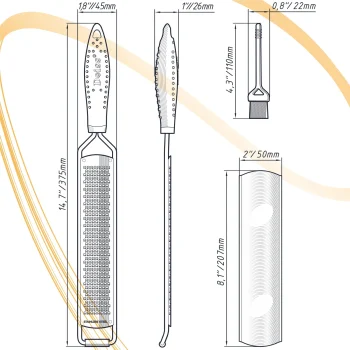
A flat sheet of steel flexes when you lean on it, and a blade that flexes skips. The curve along both edges makes the body rigid, so you can press as hard as a block of parmesan needs without the grater bowing away from it.
What it does to cheese
Hard cheese comes off in light ribbons rather than hard little granules. On hot pasta that matters: ribbons melt on contact, granules sit on top and stay there.
The handle used to be the problem
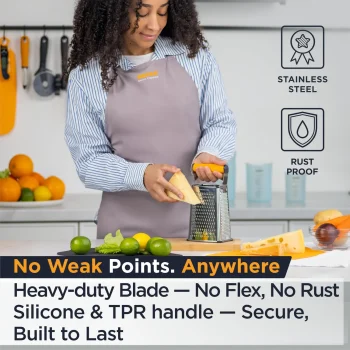
On most graters the handle is a hollow shell, and washing pushes water and food up inside it where nothing can reach. This one is sealed. It goes in the dishwasher and comes out finished, and the TPR foot holds it against a bowl rim instead of walking across the counter.
Not the right tool if…
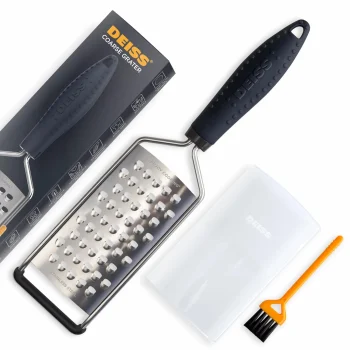
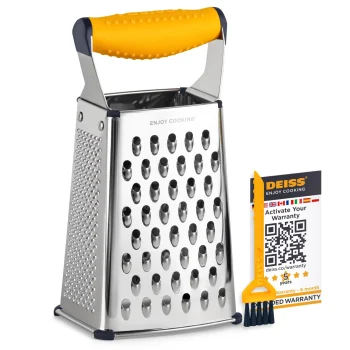
You want a pile of shredded cheddar for a bake. Fine teeth are the wrong tool for volume — that is a box grater’s job. This one is for zest, hard cheese, nutmeg, garlic and ginger.
Registered, it carries our lifetime warranty. Two minutes, and it’s ours to replace.





Reviews
There are no reviews yet.