


The failure is always the same
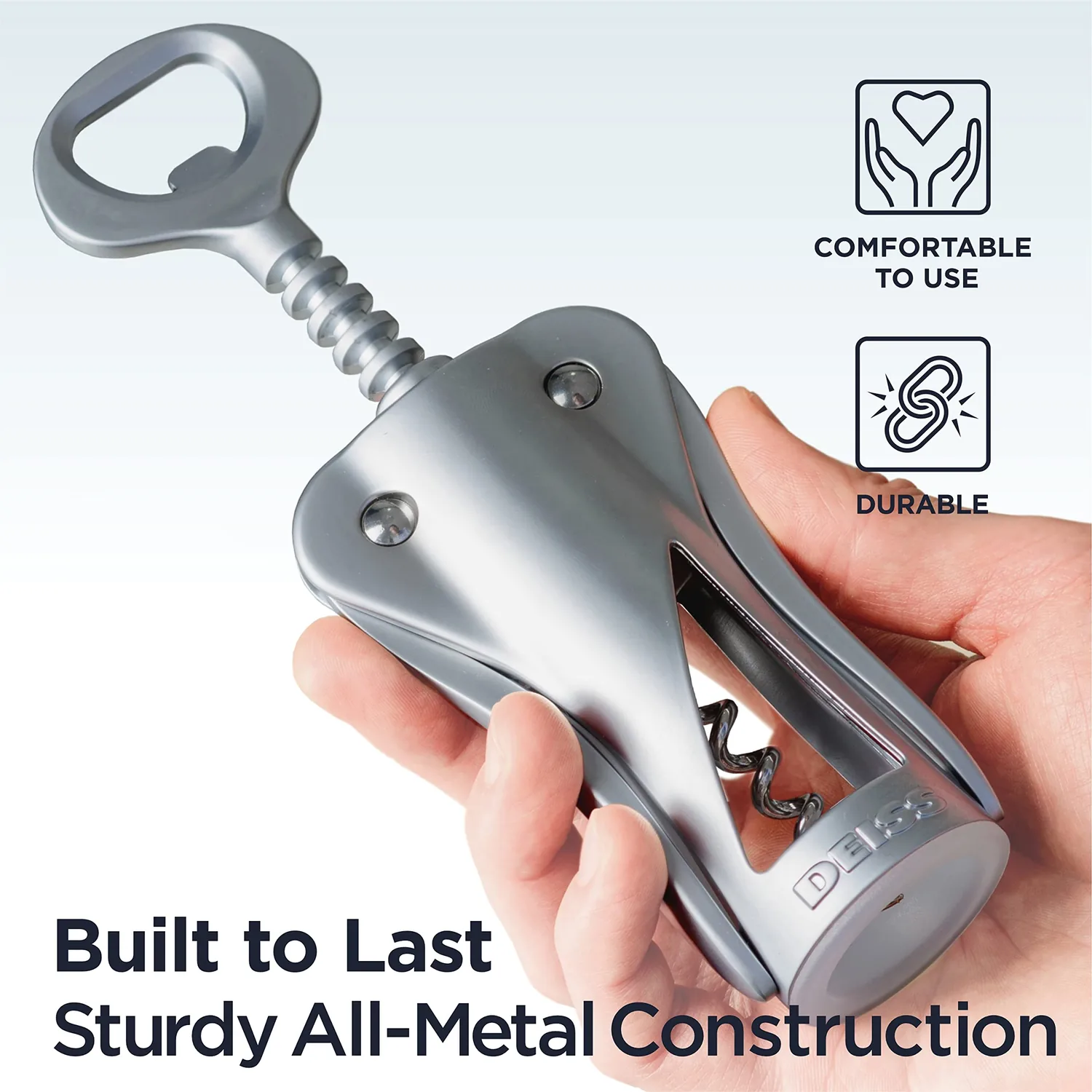
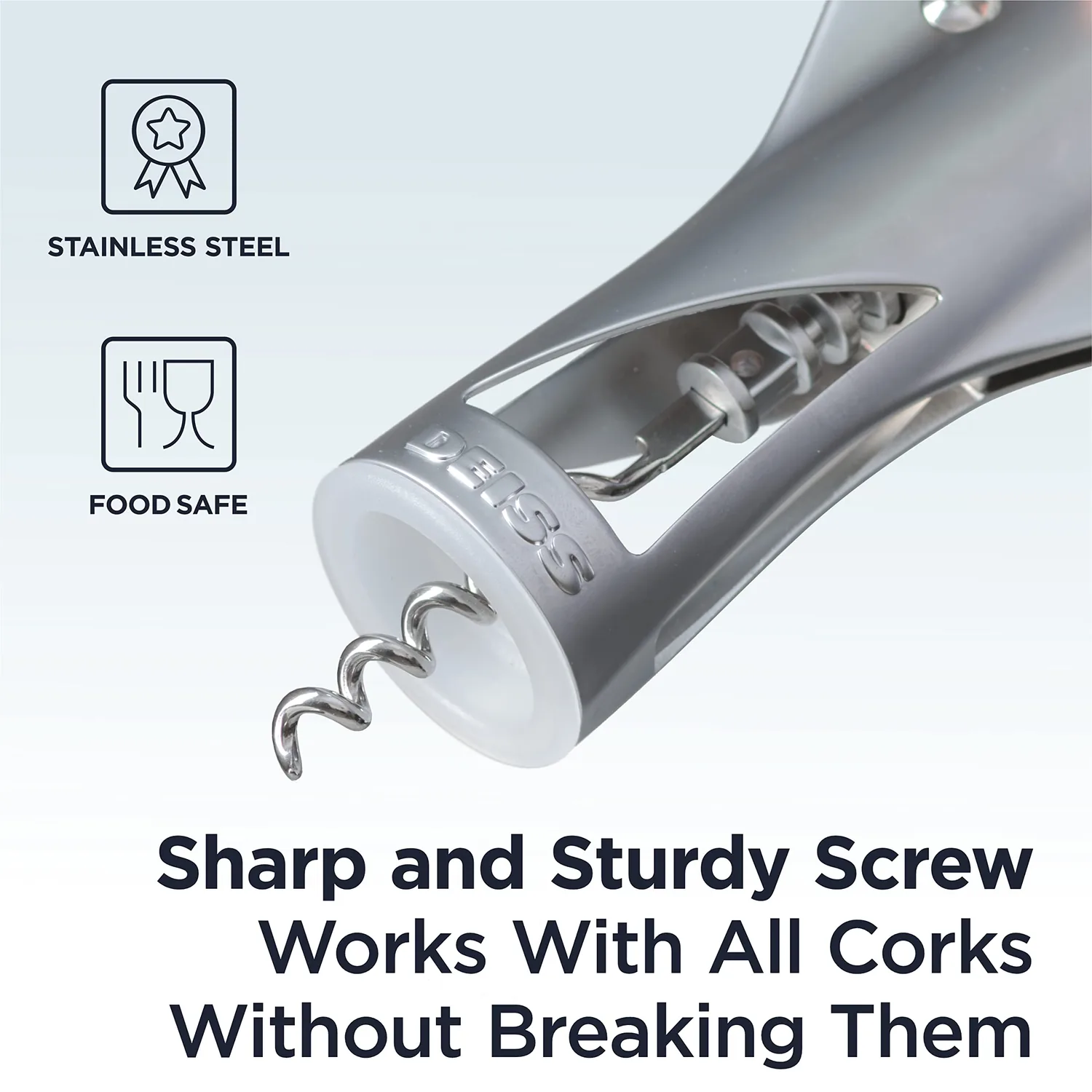
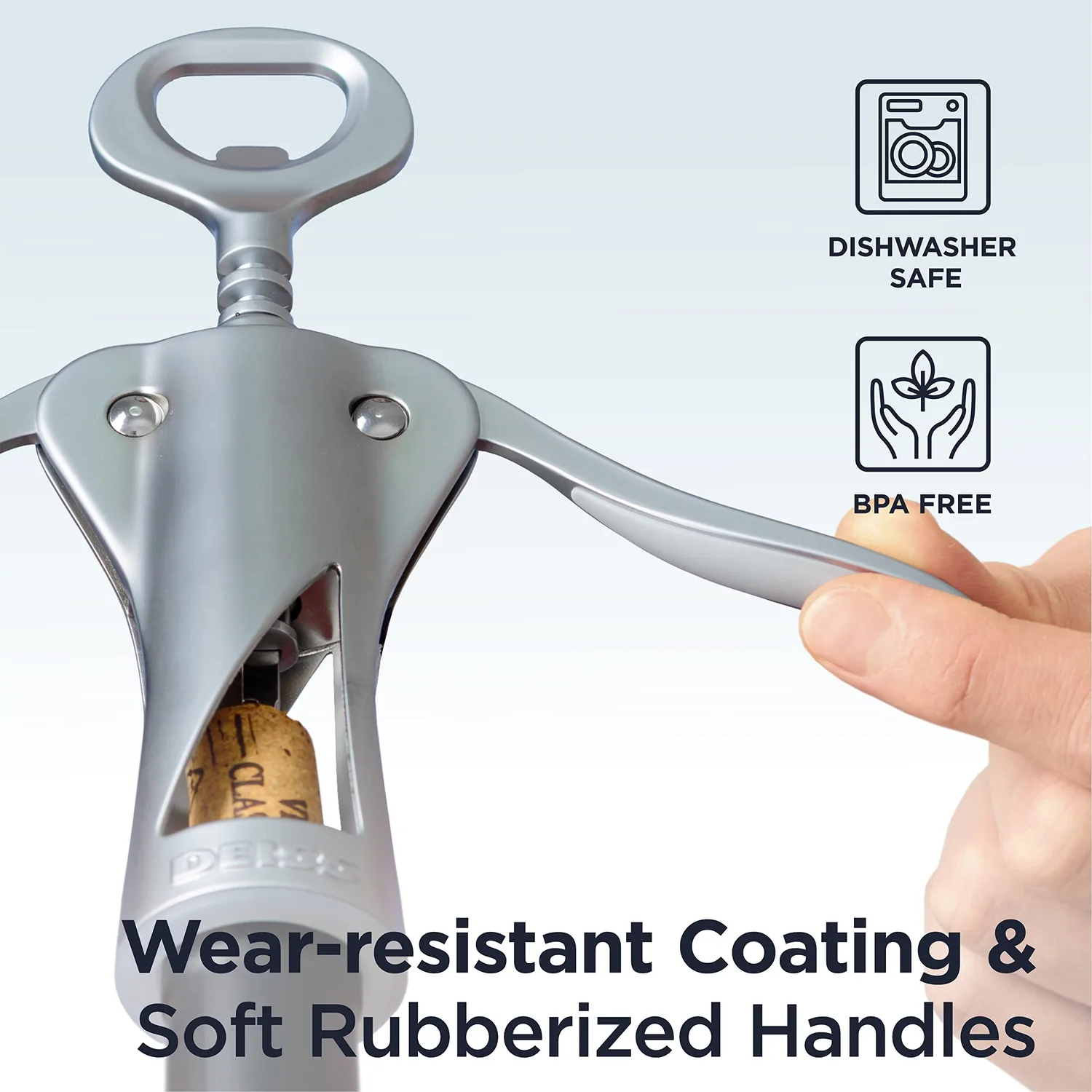
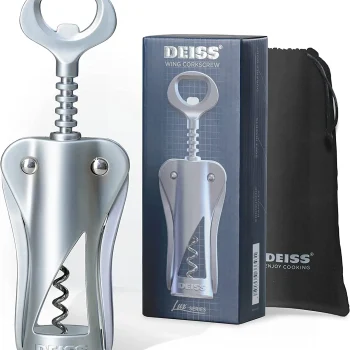
A wing corkscrew does its work through two arms and the joints that hold them. Make those of plastic, or metal arms on plastic rivets, and the first genuinely tight cork spreads them. The arm goes loose, the helix comes out at an angle, and the cork breaks. This one is metal at the body, the arms and the rivets, with stainless steel at the two points that take the load — the rivets and the helix itself.
Why winged, and not a waiter’s friend
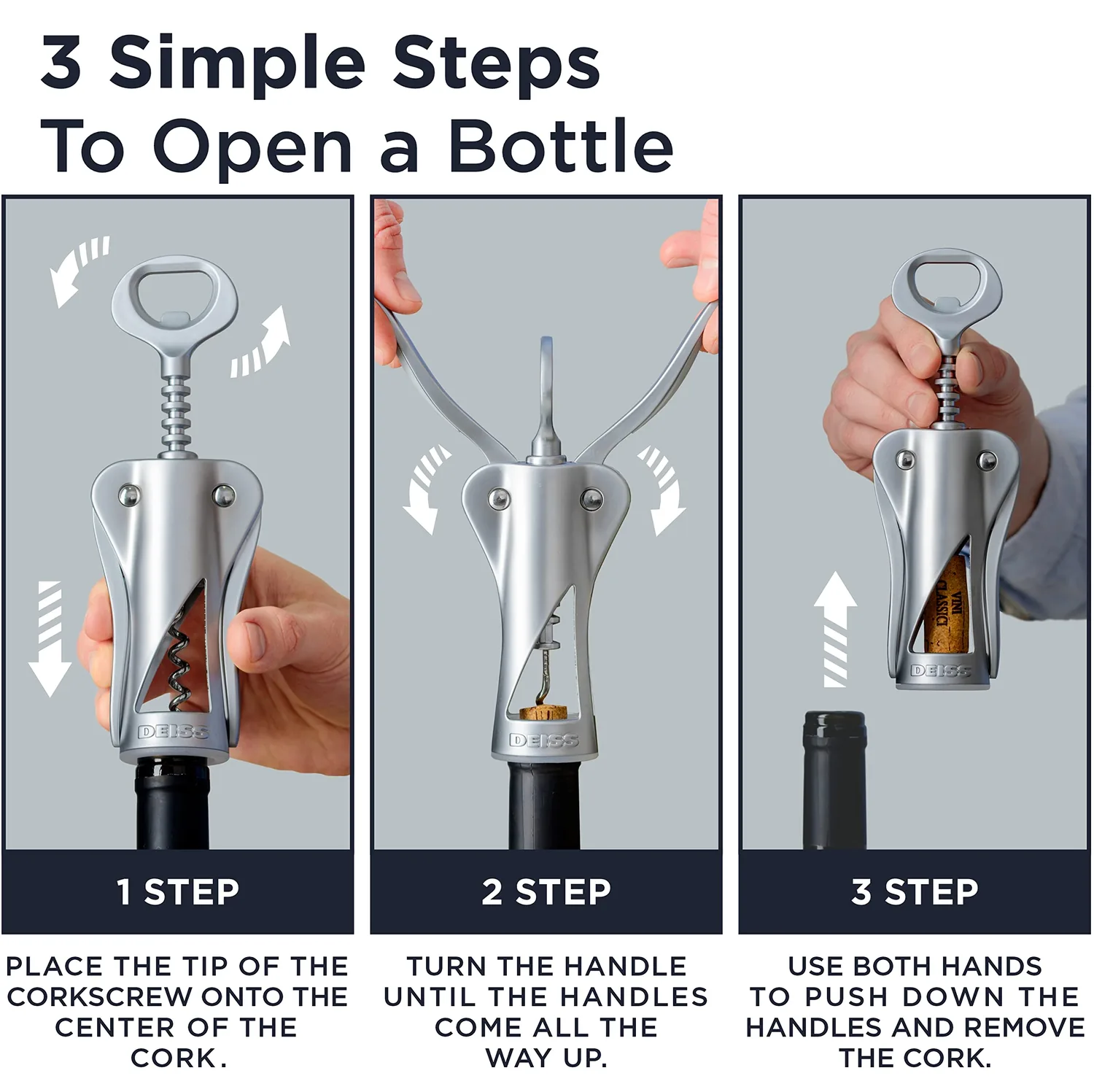
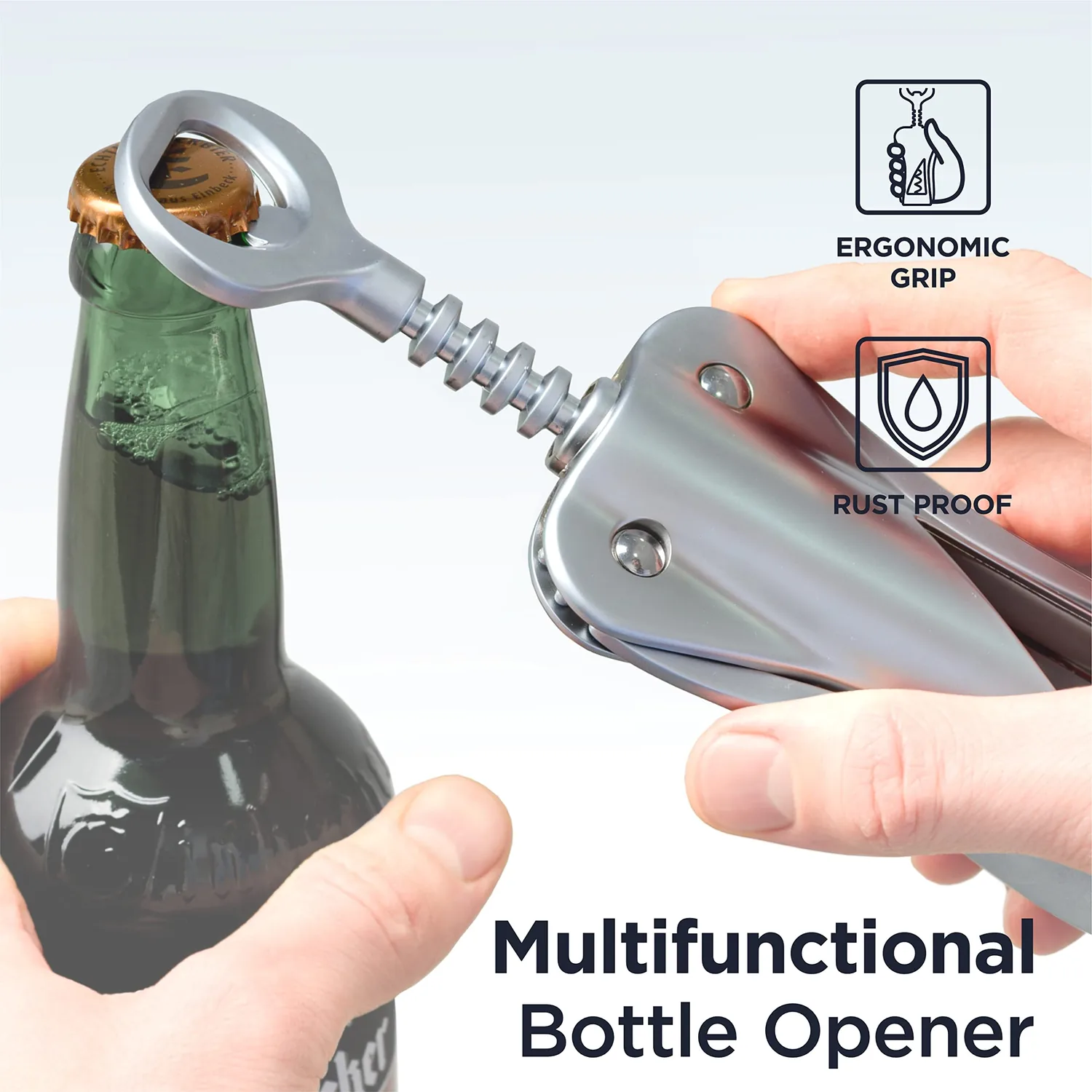
A waiter’s corkscrew is faster in a trained hand and awkward in everyone else’s. The winged design turns pulling into pressing: you brace on the lip of the bottle, push both arms down, and the cork comes up without you hauling on it. It is the opener you hand to someone else at the table without explaining it.
It is also a gift, and it looks like one
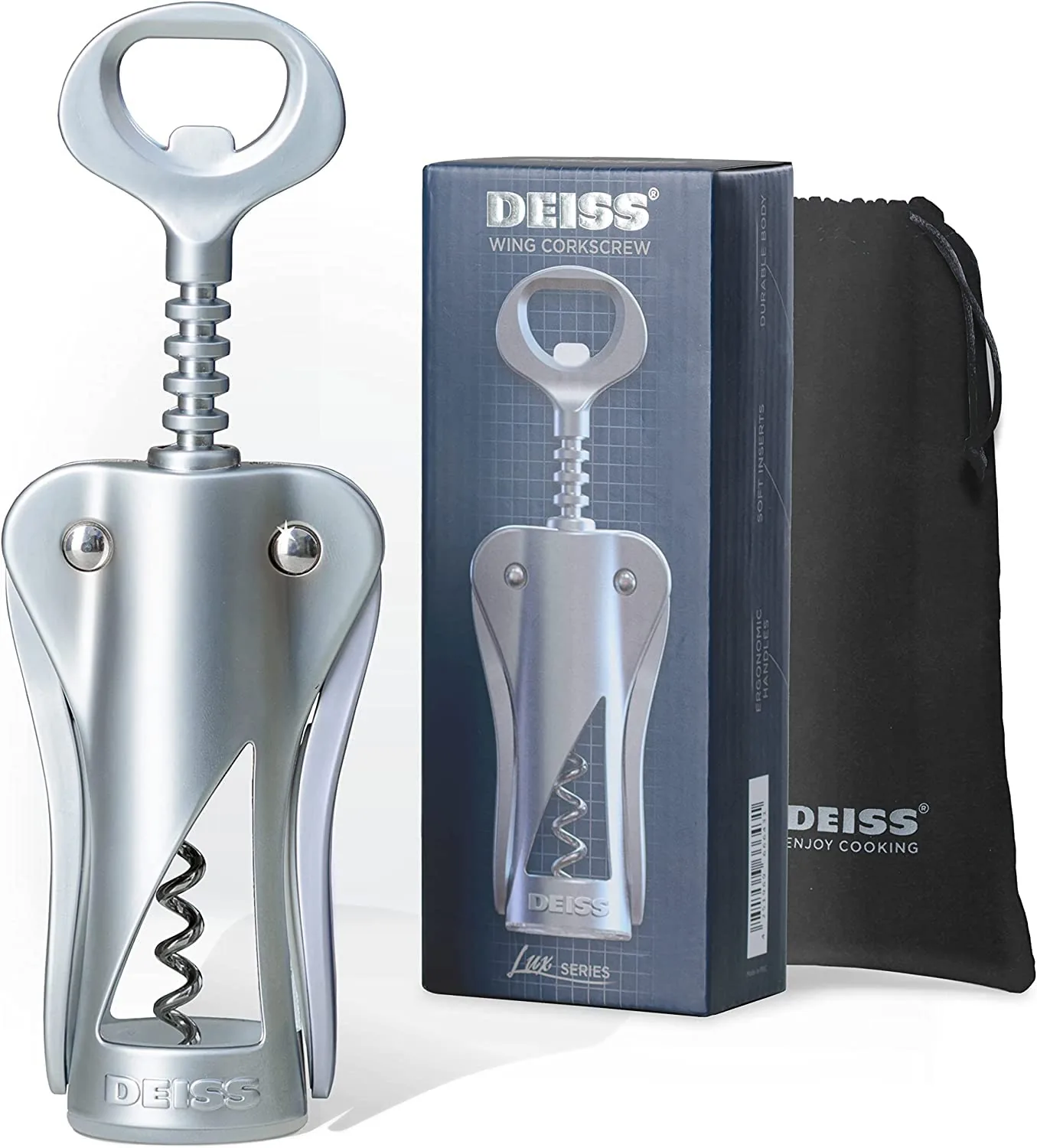
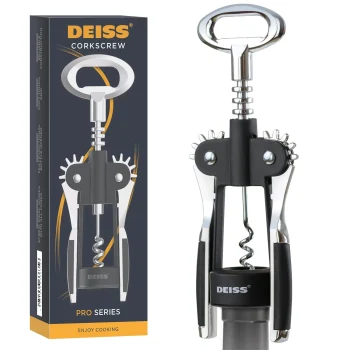
Matte silver finish and a velvet pouch. That matters for two reasons: it survives a drawer without scratching, and it is presentable as it comes, without the wrapping being the best part.
Not the right tool if…
You open old bottles where the cork has gone soft and crumbly. Any helix will tear through those — that is what two-prong openers exist for. A wing corkscrew is for the corks in nearly every bottle sold today, including the synthetic ones.
Registered, it carries our lifetime warranty. Two minutes, and it’s ours to replace.




Reviews
There are no reviews yet.