


The gap every baker runs into
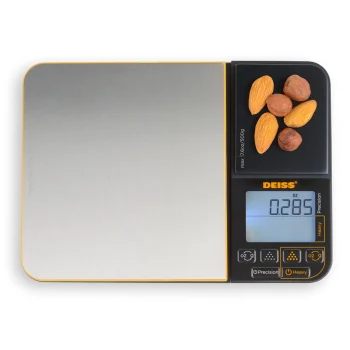
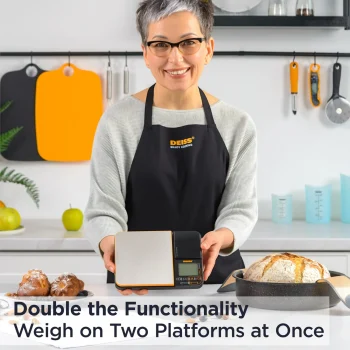
A kitchen scale that handles a bowl of flour reads in whole grams, which is useless for 2 g of salt or 4 g of yeast — the amounts that decide whether bread works. A jeweller’s scale reads to a hundredth of a gram and tips over under a mixing bowl. Most people end up owning both. This has both platforms on one body.
What each one is for
The large platform takes up to 11 lb and steps in 0.1 g: flour, water, a whole chicken, a pan you are weighing with the food in it. The small one takes up to 500 g and steps in 0.01 g: yeast, salt, spices, coffee, anything where a gram is a large error.
Why weight beats cups for baking
A cup of flour varies by as much as a third depending on whether it was scooped or spooned. That is the difference between bread and a brick, and it is why every recipe that matters is written in grams. Volume is fine for stock and oil; flour wants a scale.
It lives on a counter, so it has to clean up
The surface is 304 stainless: wipe it, and it does not hold the smell of garlic or fish the way plastic does.
Not the right tool if…
You want to weigh something bigger than 11 lb — a turkey, a sack of flour. For that you need a platform scale, and most kitchens borrow the bathroom one.
Registered, it carries our lifetime warranty. Two minutes, and it’s ours to replace.




Reviews
There are no reviews yet.